
TLDR: Fasta Blogging is blogging software built by an SEO specialist that turns your ideas into clear, optimized posts, without you spending hours on each one. It blends your expertise with AI drafting and human review, so your blog becomes a steady source of quality, strategic content instead of another task you keep avoiding.
What is Fasta Blogging and why does it matter for SEO?
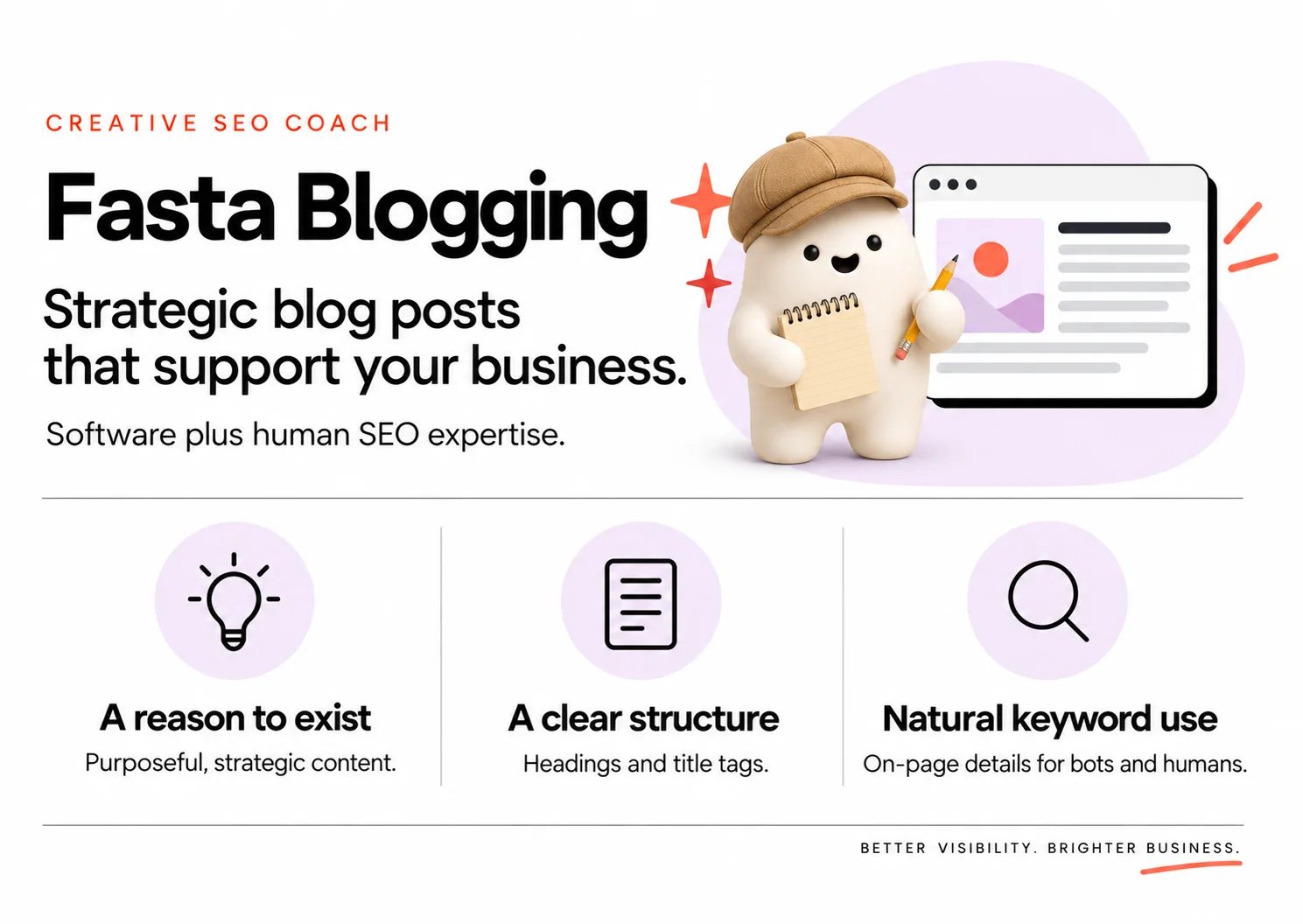
Fasta Blogging is blogging software created by an SEO specialist with 9+ years specialising in SEO and blogging for clients. It exists to help you publish quality, strategic blog posts that actually support your business, instead of low-quality bulk content that just sits there.
That matters right now because content creation has changed.
Producing good blog content used to be slower, more manual and more expensive. You would pay for research, outlines, writing, editing, images, formatting, and then still cross your fingers that the post did something for your business.
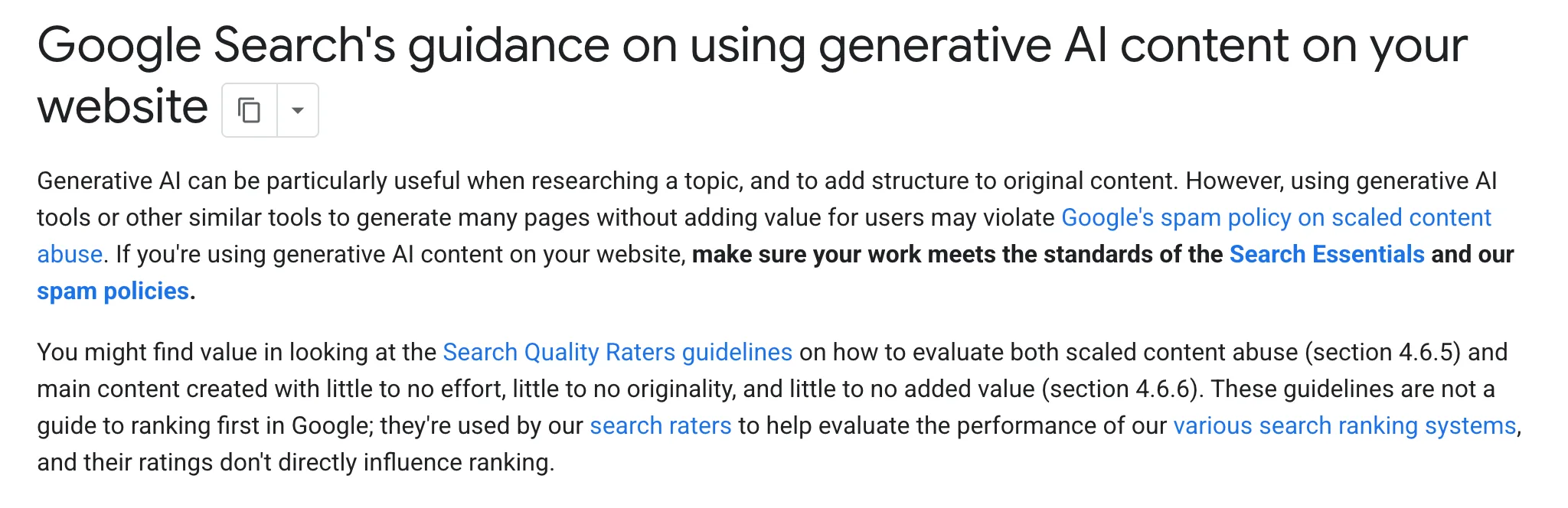
AI tools like ChatGPT made it very easy to generate a generic blog post. But that is the point: generic is easy now, so it is not a competitive edge. Many AI-only posts are not even being indexed, so they never appear in search at all.
Some people try to fix that by going for volume. They churn out hundreds of AI posts and hope a few will index and drive traffic. Google keeps updating its algorithms to fight spammy bulk-content strategies, so that approach is a bad long-term idea.
If you want your blog to support your business, you need quality over quantity.
That is where structure comes in. Semrush says on-page SEO helps both traditional search and AI search by making content clearer through structure, headings, title tags and natural keyword use. Clear, well-structured posts are easier for search engines and for people.
Fasta Blogging is built around that idea.
It is not “press a button, spit out 40 random posts.” It is software plus human SEO expertise that helps you create posts with:
- A reason to exist
- A clear structure
- Natural keyword use
- On-page details that make sense for bots and humans
So instead of worrying “Is AI going to hurt my SEO?” (which I cover in more depth in this post), the better question becomes: how can I use AI in a smart, human-led way?
That is exactly what Fasta Blogging is built to do.

Step 1: Let Fasta Blogging audit your site and strategy
Fasta Blogging starts with a proper look at your current website and strategy, so your blog is built on real data instead of guesses.
When you sign up, the software scans your website to understand your current content, structure and SEO setup. It looks at what is already there, not just what you say you want to rank for.
There is always a human SEO specialist reviewing this. I personally review your site to double-check that the setup and strategy are okay and correct. The software does the heavy lifting, but a human checks the details.
New Fasta Blogging users currently get a free phone call with an SEO specialist.
On that call, we:
- Review your SEO strategy
- Look at your website together
- Suggest some quick fixes
- Show you how to use the software
This is where we connect your blog to your actual business goals. If you are a photographer, designer or other creative on Showit, your blog needs to support how you book clients, not just collect pretty posts.
Many DIY site owners find that understanding SEO ideas is not the hard part. The hard part is consistently choosing topics that:
- Have a chance to rank
- Match what ideal clients actually search
- Fit with your current pages and offers
This first step is about making sure your foundation is right.
We check how your current content is set up, how search bots will see it, and where your blog can realistically move the needle. Then Fasta Blogging uses that as the base for your content plan.
Step 2: Fasta Blogging builds a data-led content strategy
Once your site is understood, Fasta Blogging builds a content strategy for you instead of asking you to guess topics every month.
The software is set up to research your ideal client and the topics they are actually searching for. It does not just pick broad, high-competition keywords. It looks at many different data points to decide which blog posts you should write.
The goal is simple: you are creating the best possible posts for your goals, not just filling a calendar.
For example, if you are a brand photographer, your content strategy might include:
- Key service-related topics your ideal clients search before they inquire
- Supporting posts that explain your process, timeline or style choices
- Location-focused posts that help bots understand where you work
Geo elements are a big part of how search bots understand sites, especially for local or service-based businesses. I go deeper into that in another post about geo elements and SEO, but the point here is that your blog strategy should factor your locations and service areas in from the start, not as an afterthought.
Before tools like Fasta Blogging existed, this kind of strategy work was done manually for each client. It took a lot more time and money. Now the software handles the data, while a human specialist still oversees the plan.
So instead of sitting in front of a blank Google Doc thinking “I guess I could write about my favorite lenses again,” you get a list of posts that are:
- Mapped to your offers
- Grounded in real searches
- Designed to build authority over time
That is what makes your blogging effort compounding instead of random.
Step 3: Combine AI drafting with your human input
With a strategy in place, Fasta Blogging moves to drafting, but it does not skip your voice or experience.
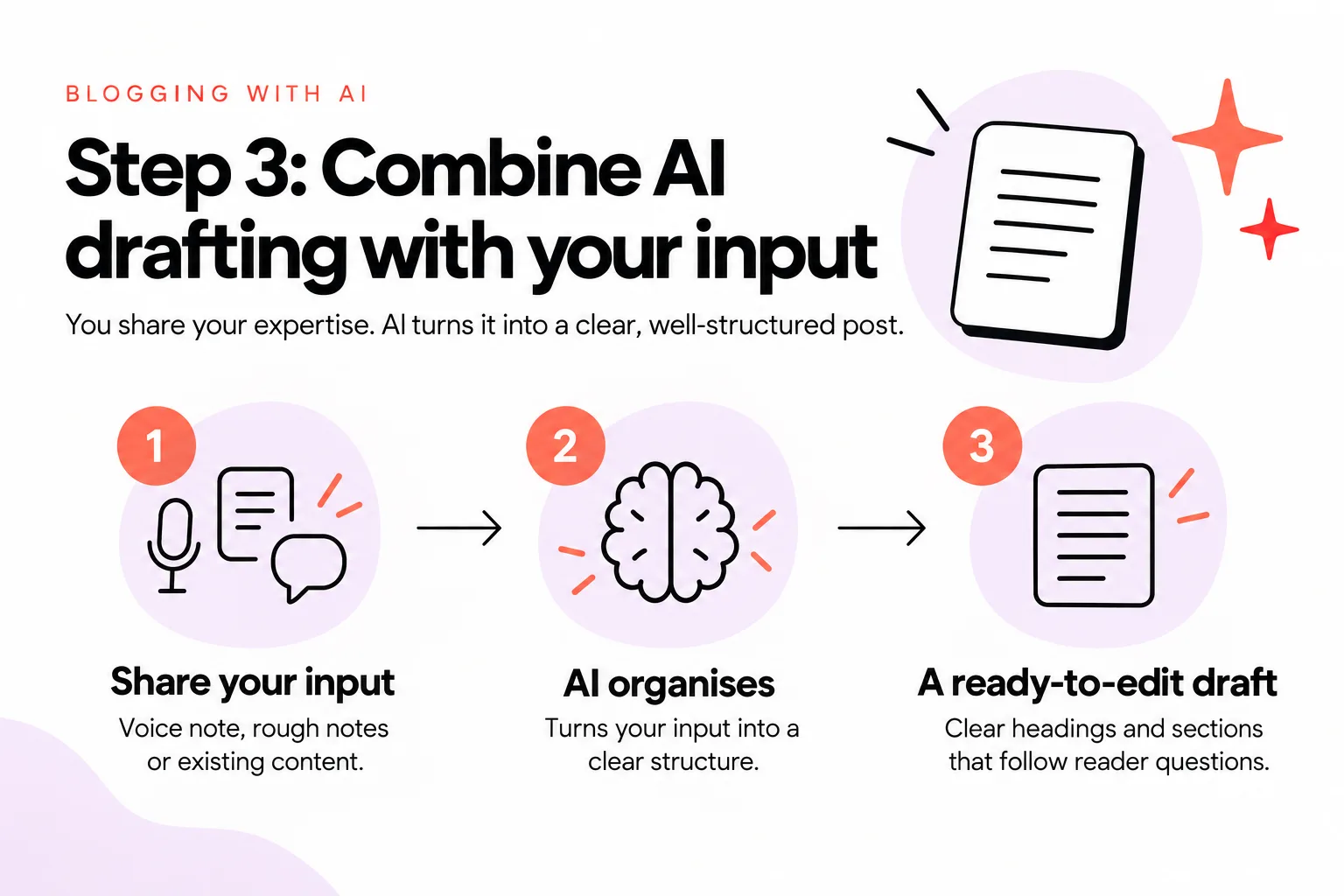
Each month, Fasta Blogging sends you the proposed blog posts for that month and asks you to give input on each topic before drafting. This part is intentionally easy.
You can:
- Dictate a quick voice note into your phone
- Drop rough bullet notes into the app
- Paste an old Instagram caption or email that fits the topic
Even that quick contribution makes a big difference to the quality of the post.
You are the expert in your process, your clients and your style. AI cannot guess your boundaries, your favorite example, or the way you like to explain things. Your rough input is what turns a generic draft into a post that actually sounds like you.
The AI then analyses the information you give and rewrites it into clearer sections. It builds a post with:
- A clear structure
- Logical headings
- Explanations that follow a reader’s questions
This matters for search and for your readers. Semrush highlights title tags, headings and clear structure as core on-page SEO elements that help search engines and readers. When your post is broken into sensible sections and headings, it is easier to crawl and easier to skim.
If you have ever tried to write a post from scratch and got stuck fiddling with the intro for 40 minutes, this step is a relief. You do not have to be “in writing mode.” You just have to get your thoughts out in any format, then let the system turn them into a proper article.
So you stay the expert. The software becomes your editor and organizer.
Step 4: Generate, review and approve your blog posts
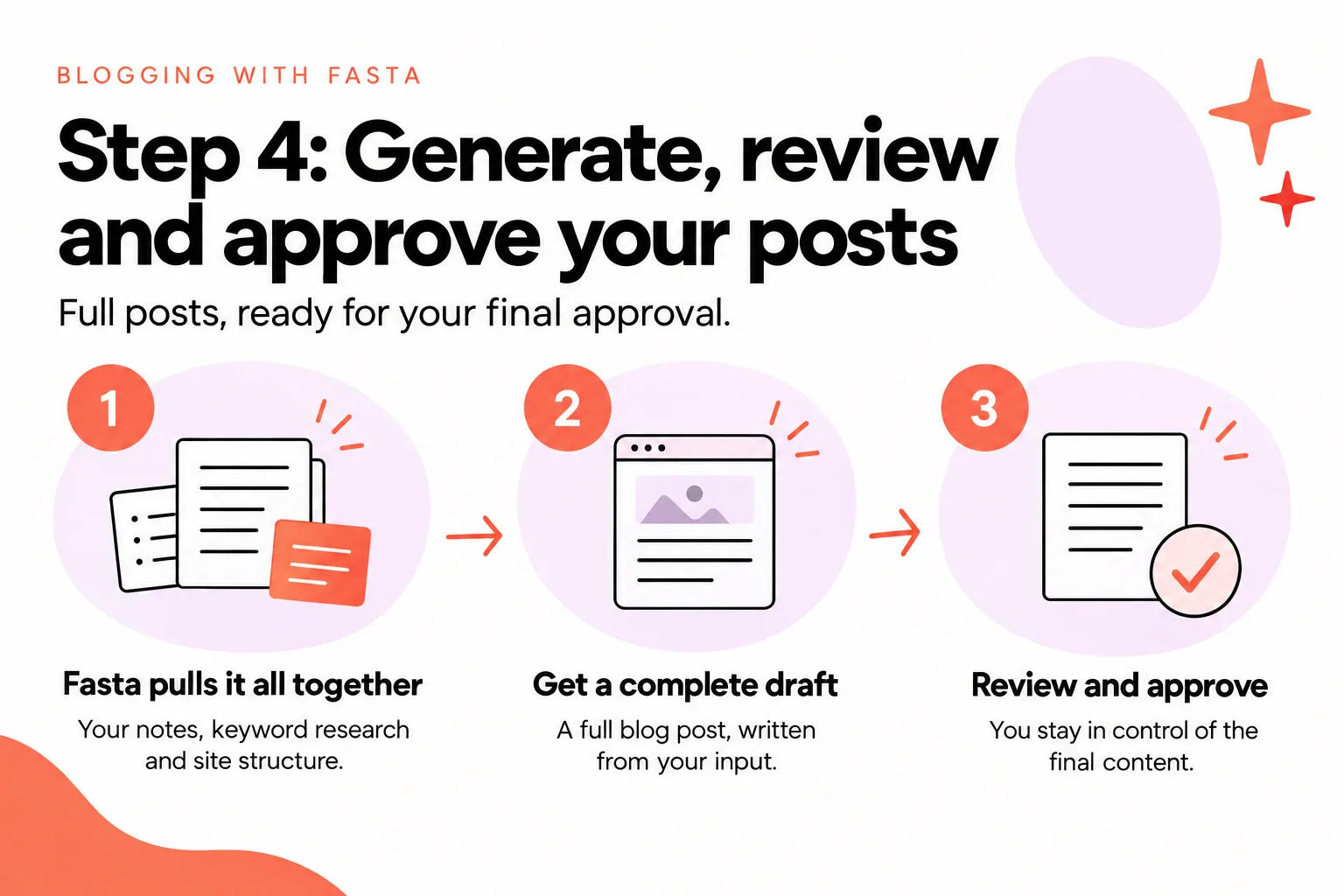
After you share your input, Fasta Blogging turns it into full posts that you can review, tweak and approve.
The system combines:
- Your notes and voice notes
- The keyword and topic research
- Your existing site structure and offers
Then it writes the blog post into full sections based on your input and the research. You get a complete draft, not just an outline or half-done idea.
If images are needed, the system can generate images for the post. You can also upload your own images, which is especially important for photographers who want to show their own work.
Once the post is drafted with images, it is sent to you for approval before publishing. You stay in control of the final content. You can remove or adjust sections to make the blog post stronger and more useful.
This is exactly the kind of human-led, AI-assisted workflow that many professionals are shifting to. In a study from Semrush, 64% of SEOs use a human-led AI-assisted workflow.
Google’s own guidance reflects this too. Google says generative AI can help with research and outlining, but content should still be fact-checked and reviewed for accuracy and trust before publishing.
So Fasta Blogging does not skip you. It shortens the painful middle of the process and gives you a strong draft to approve, while keeping you as the final filter.
For your site, this workflow plays nicely with your existing setup. You review the post, confirm it says what you want it to say, and then you are ready for the final polish.
Step 5: Optimize images and on-page SEO details for you
This is the part most DIY bloggers quietly avoid, even though it really matters.
Fasta Blogging handles the fiddly on-page details that help search bots understand your content and help your site load faster.
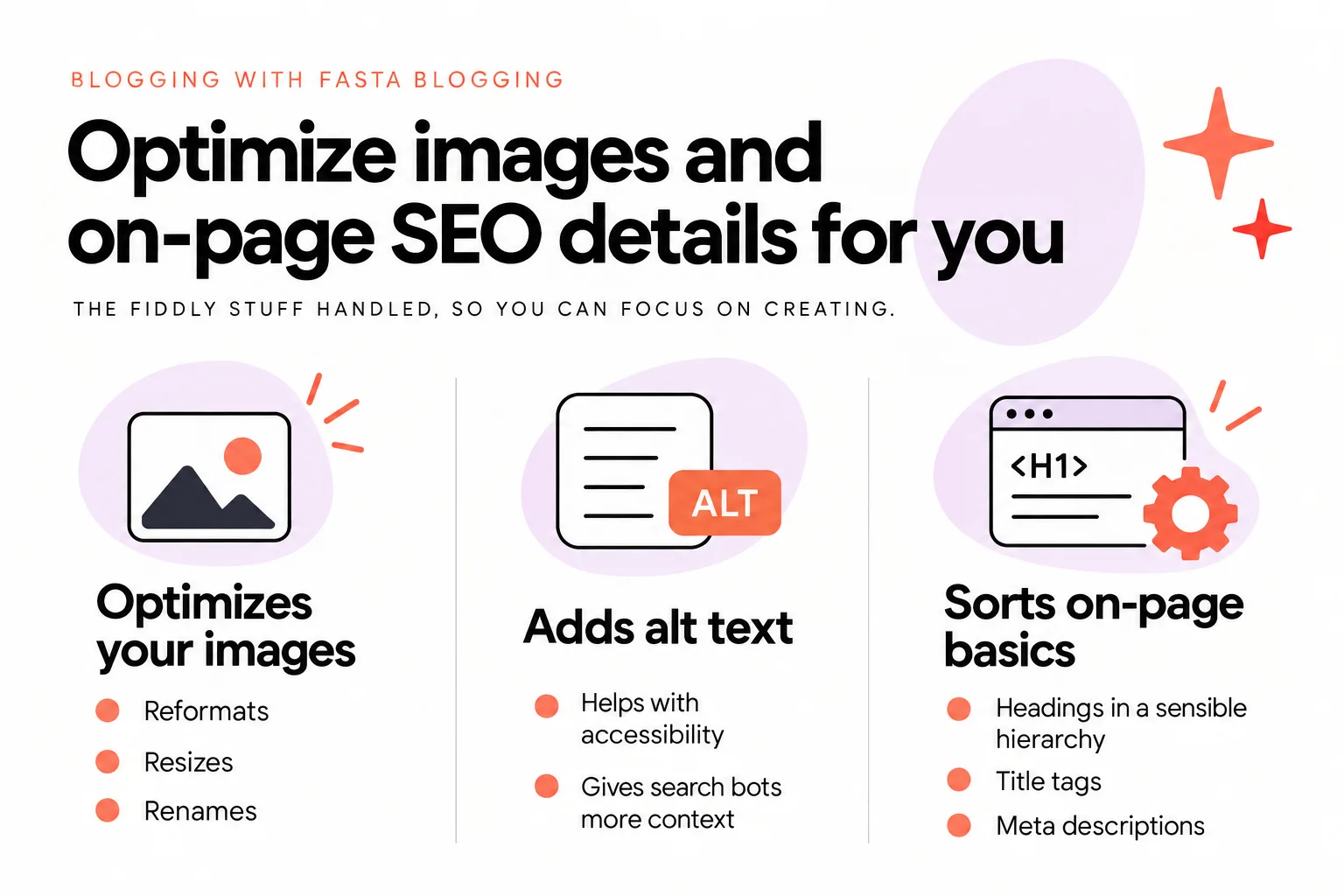
If you upload your own images, the software:
- Reformats them
- Resizes them
- Renames them
Images straight from the camera are usually huge. For photographers and other visual creatives, this can absolutely slow down pages and frustrate visitors. Optimized images are a big part of a healthy blog. If you want to dive deeper into handling visuals, I also have a post on image SEO for Showit sites.
Fasta Blogging also adds alt text to images. Alt text helps with accessibility and gives search bots more context about what is on the page.
On top of that, the software takes care of structural elements DIY bloggers often skip, like:
- Headings in a sensible hierarchy
- Title tags
- Meta descriptions
When those pieces are missing or messy, bots struggle to understand:
- What the page is about
- Which searches it is relevant to
- How it relates to other pages on your site
If you have ever seen a gorgeous blog post with no headings, no alt text and a default “New Page” title, you have seen this problem in the wild. I share more practical on-page tips for creatives in my guide on optimizing blog posts as a photographer.
Depending on your CMS, Fasta Blogging can even auto-publish posts. Some platforms, like Squarespace, make auto-publishing harder for security reasons, but copying and pasting from Fasta Blogging is designed to be very simple.
So rather than losing an hour renaming files, writing alt text and tweaking title tags, you get those details handled in the background.
What you get when Fasta Blogging runs your blog workflow
When Fasta Blogging is running your blog, you get a repeatable workflow, not just occasional bursts of motivation.
Here is what that looks like in practice:
- Your site and strategy are checked by software and a human SEO specialist, so you know your blog plan fits your actual business.
- Your content topics are chosen based on data and your ideal clients, not whatever pops into your head on a Sunday night.
- Your voice and expertise are baked in through quick notes or voice messages, so the posts sound like you and reflect how you work.
- Drafts are written for you, images are generated or uploaded, and you get to approve everything before it goes live.
- Images, headings, alt text, title tags and meta descriptions are handled, so bots can properly understand and rank your content.
Many people who still blog manually end up skipping images, ignoring heading tags and not caring about title and meta fields. Their posts often get zero results because search bots cannot understand the content properly.
SEO is still a race against your competitors. Creating quality content is not just about brand voice or aesthetics. It is about getting real results, like more qualified inquiries and better visibility for the work you are already doing.
If you ever feel like blogging is this giant, vague task where you “should probably post more,” you do not need more guilt. You need a system.
Fasta Blogging is that system. It is a done-for-you blogging service built to bring clients to your website without adding to your workload. Every post is built from your expertise, drafted with AI and reviewed by a human SEO specialist before it reaches you. It costs $125 a month and takes just around 20 minutes of your time.
If you want your Showit blog to quietly pull its weight in the background while you focus on your creative work, you can let Fasta Blogging run the whole workflow for you.


