TL;DR
AI search is changing SEO because people no longer need to click through to your website to discover your brand. Tools like ChatGPT, Gemini, Perplexity and Google AI Overviews can compare options, summarise reviews and recommend businesses directly inside the search experience.
SEO is not dead. It is expanding into GEO and AEO, which means your content needs to be clear enough for AI tools to understand, trust and reference.
To stay visible, your brand needs to appear beyond your own website. That includes industry publications, customer reviews, Reddit discussions, social media, YouTube, podcasts and other trusted third-party mentions.
Traffic may drop, but revenue can still increase because AI-influenced visitors often arrive with stronger buying intent.
The most important metrics to track now are brand search growth, assisted conversions, conversion rate by source and sales qualified leads or revenue.
The brands that win will not just be the ones ranking on Google. They will be the ones AI trusts enough to recommend.
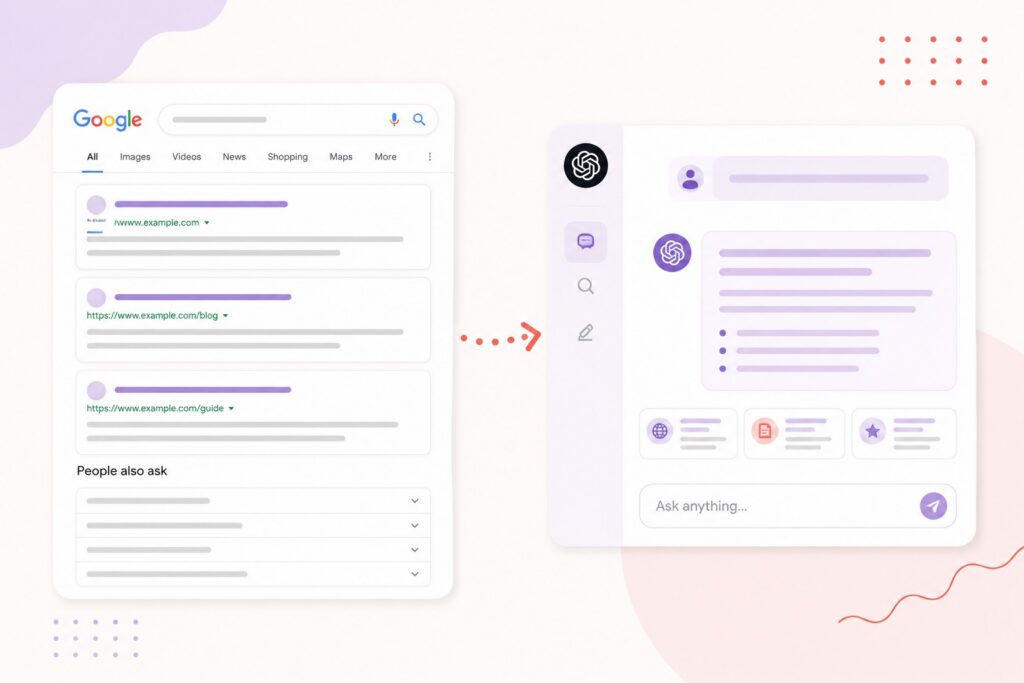
AI search tools are changing how people discover brands. Here’s what marketers need to know to stay visible when the click never happens.
Something strange is happening in marketing.
SEO teams are opening their dashboards and seeing a contradiction that doesn’t make sense. Rankings look healthy. Important keywords still sit near the top of Google. Technical SEO is solid. Content production is humming along.
Yet traffic keeps dropping.
For years, those metrics moved together. Better rankings meant more clicks. More clicks meant more leads.
Not anymore.
We’re entering what many marketers are calling the “Ghost Click” Era—a world where your content influences buying decisions without ever receiving the click.
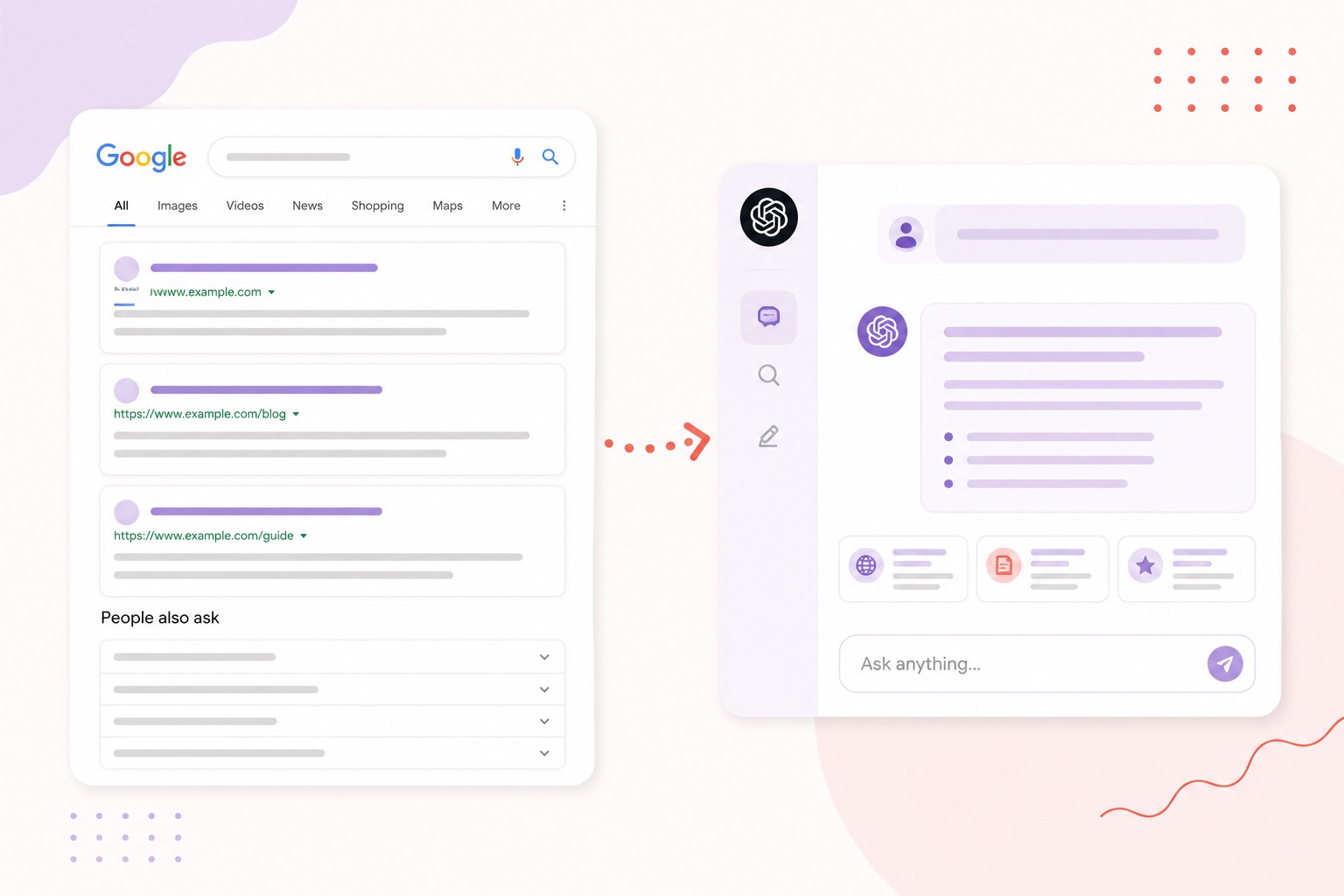
Google AI Overviews, ChatGPT, Gemini, Perplexity, and other AI-powered search experiences are changing how people discover information. Instead of visiting multiple websites, users increasingly get complete answers directly inside the search experience.
The result?
Your content may still be winning visibility while losing traffic.
This isn’t a temporary trend. It’s a fundamental shift in how buyers research, compare, and choose products and services.
The good news?
SEO isn’t dying.
It’s evolving.
The brands that understand this shift early will gain an advantage that could last for years.

1. SEO Isn’t Dead—It’s Expanding
Every few years someone declares SEO dead.
They’ve been wrong every time.
Google still processes billions of searches every day, and traditional search remains incredibly important. Ranking highly still matters.
What’s changed is that search is no longer the only place where people discover brands.
A modern customer journey often looks like this:
- Ask ChatGPT for recommendations.
- Check Reddit for real-world opinions.
- Watch a YouTube review.
- Search Google for verification.
- Visit your website.
- Buy.
Notice what’s changed?
Your website is no longer the beginning of the journey.
In many cases, it’s the end.
That’s why marketers are increasingly talking about:
Generative Engine Optimization (GEO) — optimizing your content so AI tools like ChatGPT, Gemini, and Perplexity mention your brand when answering questions.
Answer Engine Optimization (AEO) — structuring your content so AI tools can easily understand and repeat your answers.
Think of GEO and AEO as the next evolution of SEO, not its replacement.
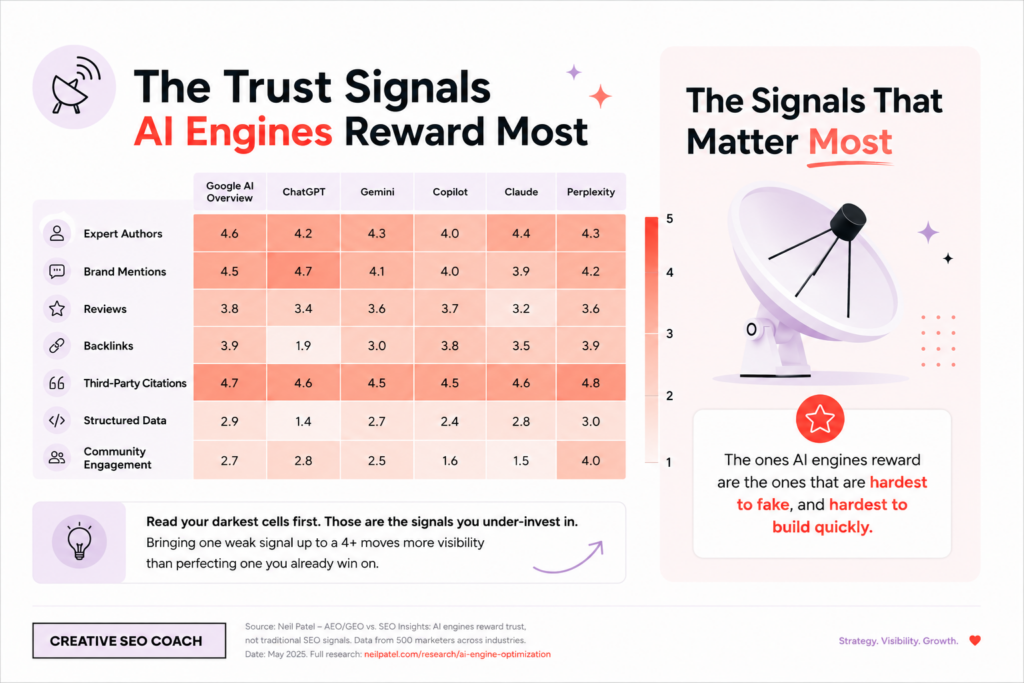
You need to be Showing up in more places than just your website
One of the elements Goole and AI is looking for is ‘Trust’. If a business is only known about from it’s website this is a weakness. Your business needs to be appearing all around the internet.
Here are the five places that matter most:
1. Industry Publications
Articles, interviews, guest posts, and expert commentary help AI systems understand your expertise and authority.
2. Customer Reviews
Platforms like G2, Capterra, and Trustpilot provide independent validation that AI systems trust.
3. Community Discussions
Reddit, niche forums, Facebook Groups, and Slack communities act as real-world reputation signals.
4. Social Media Content
Platforms such as TikTok, LinkedIn, YouTube, and X help AI understand how people talk about your brand.
5. Third-Party Mentions
Any credible website discussing your company reinforces your authority.
The key takeaway is simple:
AI trusts what other people say about you more than what you say about yourself.
If your brand only exists on your own website, you’re making it difficult for AI systems to understand who you are and why you matter.
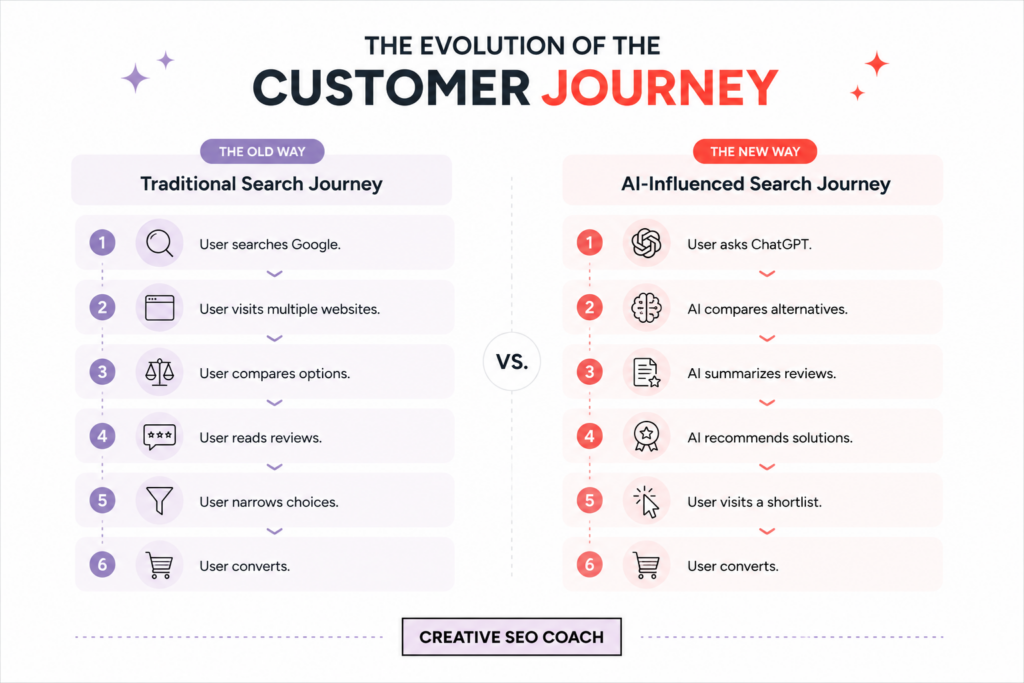
3. Why Less Traffic Can Actually Create More Revenue
This sounds backwards, but it’s one of the most important shifts happening right now.
Traditional Search Journey
- User searches Google.
- User visits multiple websites.
- User compares options.
- User reads reviews.
- User narrows choices.
- User converts.
AI-Influenced Search Journey
- User asks ChatGPT.
- AI compares alternatives.
- AI summarizes reviews.
- AI recommends solutions.
- User visits a shortlist.
- User converts.
The difference is significant.
Much of the research process now happens before the click.
By the time someone reaches your website, they’ve often already:
- Compared competitors.
- Learned the basics.
- Read reviews.
- Narrowed their options.
- Built confidence in their decision.
This means many AI-influenced visitors arrive with significantly higher buying intent.
In other words:
One AI-influenced visitor may be worth more than ten traditional search visitors.
This isn’t a traffic problem.
It’s a trust and visibility opportunity.
4. Four Metrics Every Marketing Team Should Track
Many marketing teams are still reporting on metrics that matter less every month.
Rankings.
Click-through rates.
Organic sessions.
These numbers aren’t useless, but they no longer tell the full story.
Instead, focus on these four KPIs:
1. Brand Search Growth
Are more people searching specifically for your company name?
This is often one of the strongest signals that AI visibility is increasing.
Someone may discover you through ChatGPT and then search Google for your brand before making a decision.
2. Assisted Conversions
Modern customer journeys rarely happen in a straight line.
AI, search, social media, reviews, and email may all influence the final sale.
Track the entire journey rather than only the last click.
3. Conversion Rate by Source
Compare AI-referred visitors against traditional organic traffic.
Many businesses are discovering that AI-assisted visitors convert at significantly higher rates.
4. Sales Qualified Leads and Revenue
At the end of the day, pipeline and revenue matter more than traffic volume.
Focus on business outcomes rather than vanity metrics.

5. The Four Types of Content AI Systems Love
AI can generate generic content instantly.
That means generic content is becoming less valuable every day.
The brands winning today are creating information that AI cannot easily replicate.
1. Original Research
This may be the single biggest opportunity available today.
Run surveys.
Analyze customer data.
Publish benchmark reports.
Create studies.
When you publish information nobody else has, AI systems often have no choice but to reference the original source.
2. Comparison Content
AI tools constantly receive questions like:
- Product A vs Product B
- Best alternatives to X
- Which software should I choose?
If you don’t own these conversations, your competitors will.
3. Decision-Stage Content
Many brands spend too much time creating introductory content.
Instead, focus on questions buyers ask immediately before purchasing.
Examples include:
- Pricing questions
- ROI calculations
- Migration guides
- Implementation concerns
- Feature comparisons
These topics often drive stronger business outcomes.
4. FAQ Content
AI systems love clear answers.
Start with the answer.
Then provide supporting detail.
The easier your content is to understand, the easier it becomes for AI tools to reference.
For more information on the best type of content, check out “The 5 Best Types of Content to Create for AI Search“
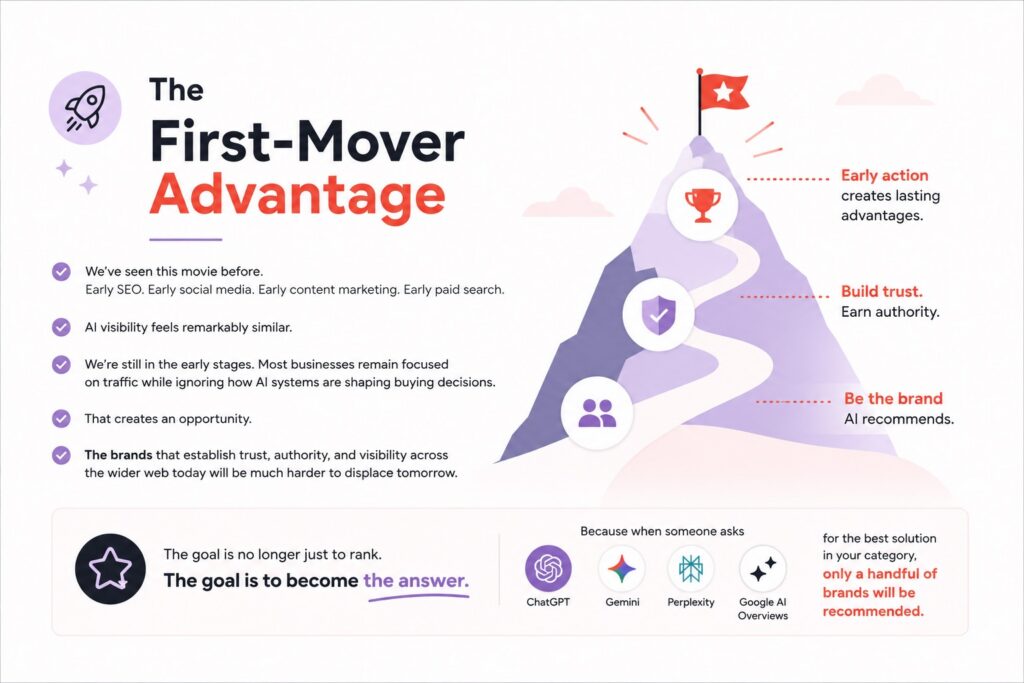
The First-Mover Advantage
We’ve seen this movie before.
Early SEO.
Early social media.
Early content marketing.
Early paid search.
The companies that recognized those shifts first gained advantages that lasted for years.
AI visibility feels remarkably similar.
We’re still in the early stages.
Most businesses remain focused on traffic while ignoring how AI systems are shaping buying decisions.
That creates an opportunity.
The brands that establish trust, authority, and visibility across the wider web today will be much harder to displace tomorrow.
The goal is no longer just to rank.
The goal is to become the answer.
Because when someone asks ChatGPT, Gemini, Perplexity, or Google AI Overviews for the best solution in your category, only a handful of brands will be recommended.
The winners won’t necessarily be the brands with the most traffic.
They’ll be the brands with the most trust.
Conclusion
The “Ghost Click” era is not the end of SEO.
It is the next stage of it.
For years, marketers measured success by rankings, clicks and organic sessions. Those numbers still matter, but they no longer show the full picture. A buyer may discover your brand in ChatGPT, compare you on Reddit, watch a YouTube review, search your name on Google and only then visit your website.
By the time they arrive, the decision may already be half made.
That is why the brands that win in AI search will not simply be the brands publishing the most content. They will be the brands with the clearest answers, strongest trust signals and most consistent presence across the wider web.
If your business only exists on your own website, you are making it harder for AI systems to understand who you are, what you do and why you should be recommended.
The opportunity now is to build visibility everywhere your buyers and AI tools are looking.
That means creating useful comparison content, publishing original research, earning third-party mentions, strengthening reviews, showing up in community discussions and making your expertise easy to understand.
SEO is not getting smaller.
It is getting bigger.
The brands that adapt now will have a serious advantage. Because in the AI search era, the goal is not just to get the click.
The goal is to become the trusted answer.
Frequently Asked Questions
What are GEO and AEO?
Generative Engine Optimization (GEO) helps your brand get mentioned by AI tools like ChatGPT, Gemini, and Perplexity.
Answer Engine Optimization (AEO) helps your content become the answer those tools provide.
Think of them as the next evolution of SEO rather than a replacement for it.
What does it mean when AI tools mention my brand?
When someone asks an AI tool for recommendations, the system pulls information from websites, reviews, articles, discussions, and other sources.
If your company consistently appears across those sources, the AI is more likely to include you in its answers.
What is an entity?
An entity is simply how Google and AI systems understand a company, person, product, or topic.
Think of it as your brand’s digital reputation profile.
The stronger and more consistent that profile becomes across the web, the easier it is for AI systems to trust and recommend you.
Why does Reddit matter so much?
Reddit contains millions of real conversations about products and services.
AI systems frequently use those discussions to understand real-world opinions and customer experiences.
That doesn’t mean you should spam Reddit. It means you should participate authentically and contribute genuine value.
How can I tell if AI helped generate a sale?
Tracking AI influence isn’t perfect because customer journeys are increasingly complex.
Someone might:
- Discover you on ChatGPT.
- Validate you on Reddit.
- Search your brand on Google.
- Visit your website.
- Convert.
The best approach is to monitor:
- Brand search growth
- Assisted conversions
- Direct traffic increases
- Customer surveys
- Lead source reporting
Together, these metrics provide a much clearer picture of AI’s influence on revenue.


